
005: DeepSeek AI Assistant by DeepSeek Android App Review
DeepSeek - AI Assistant
Get it on Playstore Get it on the App Store
DeepSeek AI Assistant for Android has carved out a distinct niche in the crowded AI assistant market with over 50 million downloads on the Play Store, 286 thousand reviews, and a 4.6 star rating. The app comes from Hangzhou DeepSeek, a Chinese AI company that burst onto the global scene in January 2025 when its R1 model briefly surpassed ChatGPT as the most-downloaded free app on the iOS App Store in the United States. That launch caused an 18 percent drop in Nvidia's share price and signaled that a new competitive force had arrived. As of January 2026, the app's monthly active users approached 131.5 million, ranking second only to ChatGPT in daily active user rankings among AI products.
The Android app serves as the official mobile client for DeepSeek's models, currently defaulting to DeepSeek V4. It offers a capable, genuinely free mobile AI assistant with real limitations around privacy, server stability, and content filtering. The app is not a ChatGPT replacement for everyone, but for a specific profile of user, budget-conscious, technically minded, not handling sensitive data, it earns its place on the home screen.
Strengths
The single greatest strength of DeepSeek on Android is that it is completely free with no subscription and no paywall on the flagship model. Every user gets access to the full V4 model, the DeepThink reasoning mode, web search, file and image upload, and voice input without spending a dollar. This is a genuine differentiator when competitors like ChatGPT and Claude lock their best models behind 20 dollar per month subscriptions. For students, developers on a budget, and users who have hit the free-tier ceilings on other apps, DeepSeek offers an unmetered fallback.
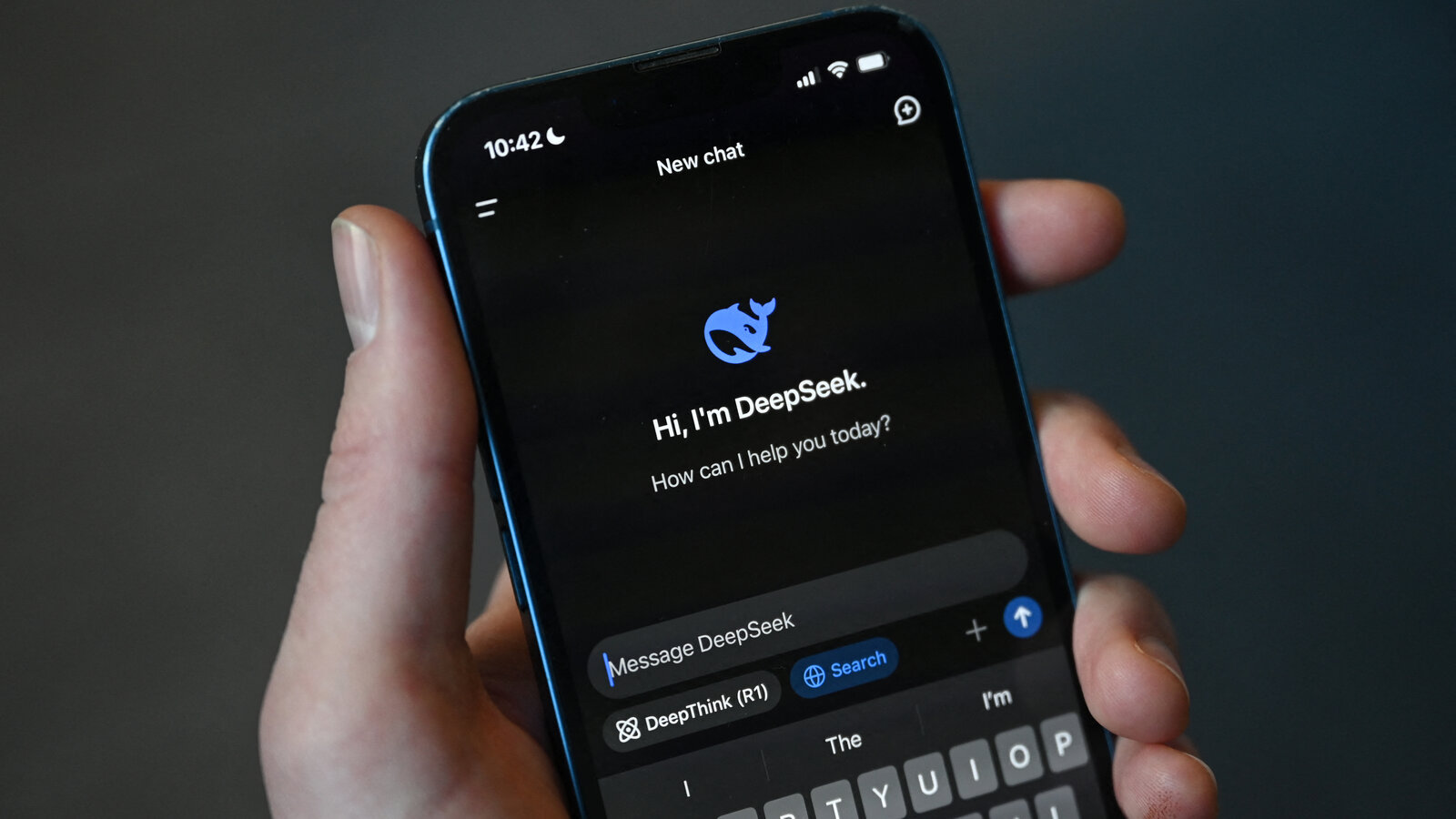
The DeepThink toggle is a standout feature. When activated, the app displays the model's reasoning steps in real time, showing each logical step before generating the final answer. This chain-of-thought reasoning is not just a gimmick. It makes the model more trustworthy for math, coding, and complex problem-solving because you can see how it reached its conclusion. The feature shines on step-by-step problems and is particularly valuable for students working through mathematics, coding challenges, or language study.
DeepSeek excels at technical tasks. Its coding performance is competitive with frontier models, scoring around 96.1 percent on HumanEval benchmarks. For pure coding tasks like algorithm design, mathematical proofs, and scientific computation, DeepSeek often outperforms GPT-5 and Gemini. The 1 million token context window on V4 allows users to upload entire codebases, long legal documents, or hours of meeting transcripts and analyze them in a single pass. The app handles PDFs, DOCX files, and images for summarization and analysis.
The open-source nature of DeepSeek's models is a significant advantage for developers and organizations. Every model ships under Apache 2.0 license, meaning you can download the weights, run them on your own servers, fine-tune them, and build commercial products with zero licensing fees. For organizations with strict data residency requirements or air-gapped deployments, self-hosting DeepSeek is the only viable option among frontier models. The API pricing is also dramatically lower than competitors. DeepSeek V4 costs approximately 1.74 dollars per 1 million input tokens and 3.48 dollars per 1 million output tokens, which is about one-sixth the cost of GPT-5.5 and roughly one-third the cost of Gemini 3.1 Pro.
The Android app itself is clean and functional. It offers a straightforward chat interface with conversation history that syncs across web and mobile when logged in. Voice input works on both platforms. The app supports Siri Shortcuts on iOS and has widgets for quick access. The user interface stays out of the way and focuses on the conversation rather than overwhelming users with features.
Multilingual performance is consistently strong. Translation quality between English, Chinese, French, and German has been reliable in testing. For non-English speakers and multilingual users, this is a meaningful advantage over competitors that sometimes struggle with languages beyond English.
Weaknesses
The most significant and unavoidable weakness is privacy and data security. Every conversation with DeepSeek's hosted API and chat app is processed on servers in China. Under China's National Intelligence Law, the government can compel any Chinese company to hand over data without user notification. This is not a theoretical concern. Germany's BSI confirmed that classified metadata leaked to a Shanghai server cluster. Italy banned the app from stores due to data protection violations. Australia, India, South Korea, Taiwan, the Netherlands, and the United States have all restricted or banned DeepSeek on government devices. The US passed the No DeepSeek on Government Devices Act. DeepSeek told EU regulators that EU law does not apply to them. For anyone handling client data, medical information, legal documents, or trade secrets, DeepSeek's privacy posture is not appropriate. Government employees in restricted jurisdictions should not install it on official devices.
Security vulnerabilities compound the privacy concerns. A database breach exposed over 1 million user records. Independent testing found a 100 percent jailbreak success rate, meaning safety guardrails can be trivially bypassed. While all AI models have security challenges, the combination of Chinese jurisdiction, data breaches, and weak guardrails creates a risk profile that no Western competitor matches.
Server stability is a recurring problem. The app experiences occasional overloads and downtime, particularly during peak usage periods. There is no paid tier with a service level agreement, so free users have no recourse when servers are slow or unavailable. In testing, quick non-thinking answers perform well, but DeepThink mode adds 5 to 20 seconds of latency, and server overloads happen frequently enough to disrupt workflows.
The content filter is aggressive and unpredictable. DeepSeek refuses to answer questions about sensitive topics including Chinese politics, Tiananmen Square, the Uyghur situation, and other subjects that conflict with Chinese government narratives. It will also decline questions about other countries' politics when they touch on China. The refusal patterns are inconsistent and sometimes bizarre, such as declining to answer questions about American political parties or general historical events. This makes the model unreliable for journalism, political analysis, and any research that might touch on geopolitically sensitive topics.
Image generation and multimodal capabilities lag behind competitors. DeepSeek does not generate images, videos, or audio. It can analyze uploaded images and documents, but it cannot create visual content. For users who need AI-generated graphics, videos, or music, DeepSeek is not a complete solution.
The web search integration is basic. While the app can search the web, the implementation is less sophisticated than Gemini's native Google Search integration or Perplexity's citation-first approach. Search results sometimes feel disconnected from the conversation, and the model does not always cite sources clearly.
There is no equivalent to ChatGPT's Custom GPTs, Claude's Projects, or Gemini's Gems. Users cannot create persistent custom assistants with specialized knowledge, instructions, or tool access. Every conversation starts from scratch with the base model, which limits productivity for users who need specialized workflows.
The app lacks deep Android ecosystem integration. Unlike Gemini which is woven into the operating system, or Meta AI which lives inside WhatsApp and Instagram, DeepSeek is a standalone app with no native ties to Gmail, Calendar, Maps, or device settings. This makes it less convenient for everyday Android users who want AI assistance across their existing workflows.
Better Alternatives by Use Case
ChatGPT by OpenAI is the better choice for general-purpose use, professional work, visual creators, and users who need a broad plugin ecosystem. It offers superior output quality for creative writing, a computer use feature for autonomous desktop operation, Deep Research for structured web browsing, over 3 million custom assistants in the GPT Store, and DALL-E image generation. The 20 dollar per month Plus plan delivers meaningfully more capability than DeepSeek's free tier for users who can afford it.
Google Gemini is superior for real-time research, Google ecosystem users, and multimodal creative work. It provides live verified data through native Google Search integration, direct access to Gmail, Docs, Drive, and Photos, and generates images, videos, and music natively. For Android users already invested in Google services, Gemini feels like a natural extension of the phone.
Claude by Anthropic is the best choice for long-form writing, coding safety, and handling large documents with minimal hallucinations. It offers a 200,000 token context window, superior writing quality that avoids the templated AI voice, and stronger ethical guardrails. The Claude Code feature enables autonomous software development from mobile through Remote Control.
Perplexity AI is ideal for research, fact-checking, and journalism. Every answer includes real-time web citations and sources, making it more trustworthy than DeepSeek for academic or journalistic work where source verification is essential. Perplexity also has stronger privacy protections and operates under Western jurisdiction.
Microsoft Copilot is the better option for Office 365 and productivity workflows. It is embedded directly into Word, Excel, Outlook, and Teams, enabling document generation and spreadsheet analysis that DeepSeek cannot match within Microsoft's ecosystem.
Poe AI is built for power users who want to compare multiple AI models in one app. It aggregates GPT, Claude, Gemini, and other models, allowing users to switch between them per task rather than being locked into a single provider.
Meta AI is the best completely free option for casual everyday use. It is integrated into WhatsApp, Instagram, and Messenger with no subscription required for core features. While its reasoning depth is limited, it offers better privacy transparency than DeepSeek for users concerned about data jurisdiction.
Verdict
DeepSeek for Android is a remarkable technical achievement offered at an unbeatable price. The completely free access to a frontier-level model with strong coding performance, a 1 million token context window, and transparent reasoning makes it an essential tool for students, budget-conscious developers, and technically minded users who do not handle sensitive data. The open-source licensing and dramatically lower API pricing make it invaluable for organizations that can self-host.
However, the privacy risks are not theoretical. They are documented, ongoing, and severe enough that multiple governments have banned the app from official devices. The server instability, aggressive content filtering, lack of multimodal generation, and absence of custom assistant features make it unsuitable as a primary AI tool for professionals, journalists, or anyone handling confidential information.
Recommendation
Install DeepSeek as a secondary AI assistant for technical tasks, coding help, mathematics, and budget-friendly API access. Use it when you need deep reasoning on non-sensitive topics and when other free tiers have run out. But do not use it for anything involving client data, medical information, legal documents, or politically sensitive research. Keep ChatGPT or Claude as your primary professional tool. Use Gemini for Google integration and real-time data. Use Perplexity for citation-backed research. The most productive Android users in 2026 treat DeepSeek as a powerful but risky specialist tool, not a daily driver.