
20: Revolutionary Audio Tools for Every Player
Moises: The Musician's AI App
Get it on Playstore Get it on the App Store
Amid the ever-changing music technology environment, few pieces of software have made professional-grade audio manipulation so convenient as Moises. Boasting a whopping 10 million+ downloads and an astonishing 4.7-star rating based on 380,000+ reviews, this AI-driven music software has gained must-have status among musicians, producers, students, and sound lovers. But what gives Moises its edge, and does it truly live up to its peerless reputation?
The AI Revolution in Music Production
Just recently, isolating individual instruments from a multitrack audio recording required high-end studio equipment, special software programs, and professional audio engineering skills. Procedures like vocal extraction from a song, time stretching without altering pitch, or practice with isolated instrument tracks were either impossible for amateur musicians or required professional studio access.
Artificial intelligence has achieved this to this world. Programs of machine learning software operating on millions of audio recordings can now analyze complex musical pieces and separate them into identifiable parts—vocals, drums, bass, guitar, and others—with great accuracy. This technology, previously exclusive to research institutions and professional recording studios, is now accessible to anyone with a smartphone.
Moises leverages this potential of AI to provide musicians with tools that were unattainable a couple of years back. The app is a revolutionary shift in the way musicians practice, learn, compose, and interact with recorded music.
What is Moises?
Moises is an AI-powered audio processing application designed specifically for musicians and music enthusiasts. At its essence, the app's functionality is smart audio separation—any song and breaking it down into separate vocal and instrumental tracks. Aside from separation, Moises also offers tempo manipulation, pitch shifting, addition of a metronome, chord detection, and a number of additional functions to facilitate practice, performance, and creative play.
The app works with audio tracks from your device library, streaming services (with some limits), or even direct recording. After importing, Moises treats the audio with sophisticated AI algorithms and provides users with isolated tracks that can be managed individually, muted, soloed, or even set individually.
Core Features That Changed the Game
AI Audio Separation: The pièce de résistance feature separates vocals, drums, bass, guitar, piano, and other instruments from any song. This separates it so that musicians can create bespoke backing tracks by removing their instrument, practice sections by removing them, or deconstruct arrangements by examining individual components.
The separation quality is actually impressive, albeit a bit dependent upon how busy the original mix. Clean-cut arrangements with clean instrumental separation sound great, but very dense, highly processed mixes may introduce some artifacts or bleed between tracks. Aside from the occasional flaw, though, the technology is much more capable than most would ever be able to achieve with traditional EQ-based methods.
Tempo and Pitch Control: Artists can slow down songs for practice without changing pitch, easier to learn complex sections at convenient speeds. Alternately, playing songs faster develops technique once sections are learned. Transposing songs into different keys is possible through pitch shifting, allowing for vocal ranges or other tunings without manual transcription.
These changes hold unparalleled audio quality, not producing the chipmunk effects or muddied artifacts that marred previous time-stretching technologies. The AI processing retains the natural tone of instruments and voices with even a broad range of tempo and pitch adjustments.
Chord Detection: The app identifies and displays chord progressions in songs automatically, and it is a valuable learning tool for music students studying harmony, songwriting, or trying to figure out songs by ear. Far from perfect—intricate jazz voicings or unusual harmonic progressions sometimes flummox the algorithm—the chord detection is otherwise extremely good at most popular music.
Count-In and Metronome: Integrated metronome capabilities with editable count-ins enable artists to practice with perfect timing. The metronome can sync with the estimated tempo of the song or operate freely for warm-ups and exercises.
Loop Sections: People can identify specific sections of songs for looping, perfect for mastering difficult passages, dissecting specific arrangements, or jamming over particular chord progressions. Looping works perfectly without audio artifacts at loop points.
AI Mastering: Some versions include AI-powered mastering that can enhance sound quality, balance frequencies, and provide professional-sounding finish to recordings or isolated tracks.
Revolutionary Practice Tool
For musicians, Moises entirely transforms the practice experience. Guitarists can remove guitar parts and practice with the original bass and drums. Vocalists can remove lead vocals but keep backing vocals and instrumentation. Bassists, drummers, and keyboardists all receive specially tailored backing tracks to meet each player's practice needs.
This skill converts passive listening into active learning. Instead of attempting to listen for distinct parts in a chaotic mixture, musicians can extract just what they are attempting to learn, examine it closely, and then learn with the whole arrangement without their part.
Students of music benefit significantly from such skills. Learning difficult jazz standards is less challenging when you can play at half speed without altering pitch. Understanding orchestral scores is improved when you can distinguish between separate string sections and brass and woodwind sections. The teaching applications are almost limitless.
For Content Creators and Producers
Besides practice applications, Moises provides content creators with a need for instrumental versions of a song to use in videos, podcasts, or social media content. Though copyright restrictions still hold, the ability to generate karaoke tracks, backtracks, or acapella versions offers creative value.
Producers and remixers use Moises to build stems, sample, and creatively transform. The isolated tracks serve as a foundation for new music, mashups, or new production techniques.
Cover bands and tribute acts love high-quality backing tracks that closely mimic the original track. Artists and DJs can make special edits, extended mixes, or different arrangements for live performance.
User Experience and Interface
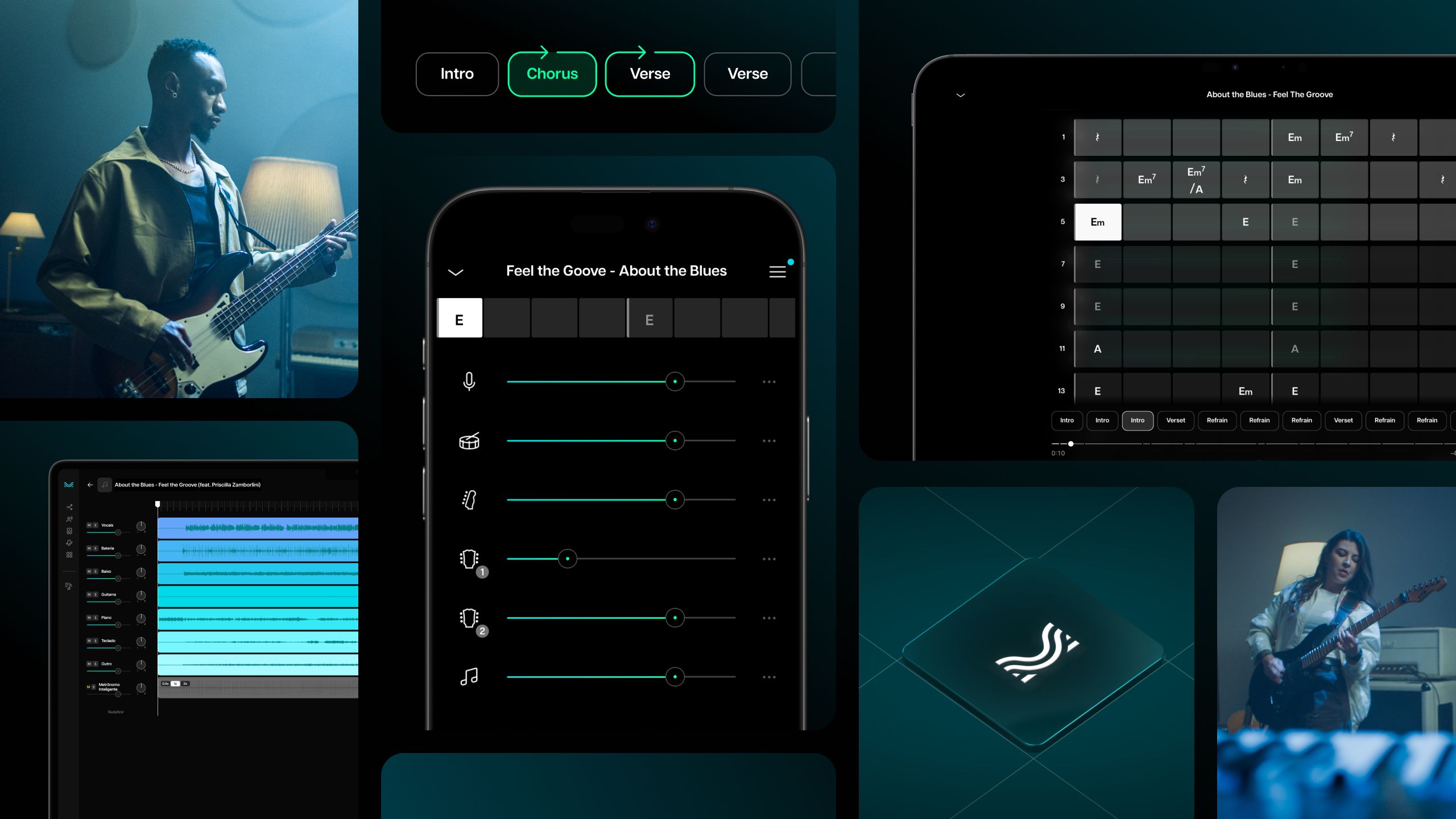
Moises boasts a clean, musician-friendly interface that pairs solid functionality with simplicity. It is easy to use: import a song, wait for AI processing time (typically 1-3 minutes based on song length and server load), then load split tracks via a mixer-type interface featuring volume sliders and mute/solo.
Visual feedback includes waveforms, chord diagrams, and tempo indicators which help users to read songs and structure. Both phones and tablets are suitable for the user interface but, naturally, more convenient control of several parameters simultaneously is permitted by larger screens.
Moises servers rather than locally on your device do the processing, so initial separation requires internet access. Once processed, songs can be accessed offline to allow practice sessions off the network.
Limitations and Issues
Moises, as great as it is, also has some limitations. The AI separation, while excellent, is not perfect. Challenging mixdowns with similar frequency content from a number of instruments may generate separation artifacts—small bleeding of one instrument into another's isolated track or loss of subtle details buried in complex ensembles.
The free model has limitations on processing time, number of songs, and availability of certain features. Serious users are likely to need subscription plans, which are recurring charges. Subscriptions are reasonably priced relative to the technology provided, but cheap musicians should factor ongoing fees into their decision.
Copyright and licensing concerns arise in the case of commercial recordings with Moises. Personal use and instruction are generally fair use but public performance, content creation, or commercial use need to be licensed. Moises provides tools and not rights to the underlying music composition or recording.
Server-based processing means functionality depends on having infrastructure and services available to Moises. If the business suffers financially or experiences service failure, access to these tools could be impeded—a worry for users who count on the platform.
Pros:
- Groundbreaking AI audio separation with record-breaking track separation
- Huge user base with 10M+ downloads proving reliability
- Excellent ratings of 4.7 stars from 380K+ reviews
- Tempo control without pitch change for effective practice
- Pitch shifting that enables key transposition
- Automatic chord detection accelerating song learning
- Custom backing track creation for any instrument
- High-quality time-stretching maintaining audio integrity
- Loop sections for focused practice on difficult passages
- Regular updates with improving AI algorithms
- Multi-platform support across devices
- Educational value for musicians at all levels
Cons:
- Subscription costs for full feature access
- Separation artifacts in complex mixes
- Requires internet for initial processing
- Copyright considerations for commercial use
- Server dependency for core functionality
- Processing wait times before accessing separated tracks
- Limited free tier restricting casual use
- Source material determines quality
- Processed song storage requirements
- Potential continuity of service problems
Pricing and Value Proposition
Moises operates on a freemium basis with basic functionality at no charge and enhanced capabilities incurring subscription. The free option allows testing of the technology with limitations on processing time for songs and features.
Subscription levels provide unlimited processing, access to the full feature set, higher quality of separation, and priority processing speeds. For professional musicians using the app on a regular basis, the subscription cost is excellent value compared to other options or studio time required to accomplish the same.
Hobbyists, students, and occasional users would be content with the free version for limited use, but professionals, music teachers, and heavy learners will be able to offset subscription charges by frequent use and productivity.
Alternatives and Competition
AI music separation market has turned out to be saturated with numerous substitutes offering similar features:
Lalal.ai is very good at stem separation with superior quality but primarily exists as a web application rather than embedded software.
Splitter and SongDonkey are separation products for audio with different pricing models and levels of quality.
RipX DeepRemix is editing software on your desktop with more advanced editing capabilities beyond usual separation.
iZotope RX is professional-strength editing and repair of audio for serious producers, but at much greater cost and technical complexity.
Moises excels with mobile access, musician-oriented features beyond mere isolation, and its one-platform consolidation of multiple tools (tempo, pitch, chords, practice tools) that are otherwise standalone. The unification creates a space solely for musical learning and practice rather than pure audio processing.
Real-World Applications
Musicians of all styles and skill levels discover real-world uses:
Guitar Students: Peel off guitar parts to practice along with professional backing bands, develop technique, and enhance timing.
Vocalists: Eliminate lead vocals but retain backing vocals and instrumentation for accurate practice situations.
Music Teachers: Create customized instructional materials, diagram individual instrumental parts, and provide students with professional-level practice tracks.
Bands and Ensembles: Practice songs more efficiently with each musician being able to individualize and practice his/her own part.
Transcribers: Slow down challenging parts and break out instruments to accurately transcribe music by ear.
DJs and Performers: Create new edits, mashups, and live performance arrangements of popular hits.
The Future of Music Learning
Moises is more than a brilliant app—it is a model for how AI technology is transforming music learning and facilitating practice. The distance between pro studio ability and the ground level is bridged increasingly, giving musicians access to learning speeding and creativity expanding tools.
As AI codes enhance, the quality of separation will increase, time taken will decrease, and new features will be added. The trend is toward a future when any musician will have instant access to, editing of, and learning from any sound record with unmatched control and clarity.
Final Verdict
Moises: The Musician's AI App has achieved its star rating of 4.7 and 10+ million downloads by offering genuinely revolutionary features that meet real musician needs. The AI-powered audio separation, tempo control, pitch shifting, and practice-focused features form a valuable collection of tools for modern musicians.
Though not without its flaws—separation artefacts are present, subscriptions are paid for, and copyright issues hold sway—the app offers features that were simply not accessible to most musicians only a few years ago. The software actually works, the interface accommodates efficient workflows, and the frequent updates reflect a continuing desire to improve.
For serious musicians who want to practice, learn, or simply explore creatively, Moises is one of the most significant music education technology breakthroughs. Creating customized backing tracks in seconds, slowing down complex passages, extracting individual instruments, and making audio edits without losing sound quality changes everything about how musicians interact with recorded music.
Whether you're beginning to learn your first pieces, an intermediate player expanding technique, an advanced player refining complex arrangements, or an instructor creating instruction, Moises offers resources that accelerate progress and unlock doors.
Rating: 4.5/5 - A fantastic app that can use AI tech to solve real musician problems. Hundreds of thousands of users' high ratings are a testament to its use in real life. Minor deductions for subscription costs and occasional disconnection artifacts do not detract from its revolutionary impact on learning and practicing music. Highly suggested for all musicians who want to accelerate their development and enhance their musical skills.